
Pool Pump Series: Capacitor Issues – Why Your Pump Won’t Start (or Keeps Cutting Out)
Your pool pump suddenly won’t start… or maybe it turns on, makes a humming noise, then shuts off.
Before assuming the worst, the issue may be something small but important — the capacitor.
As part of our “Know Your Pool Pump” series, we’re breaking down one of the most common electrical issues affecting pool pumps.
What Is a Pool Pump Capacitor?
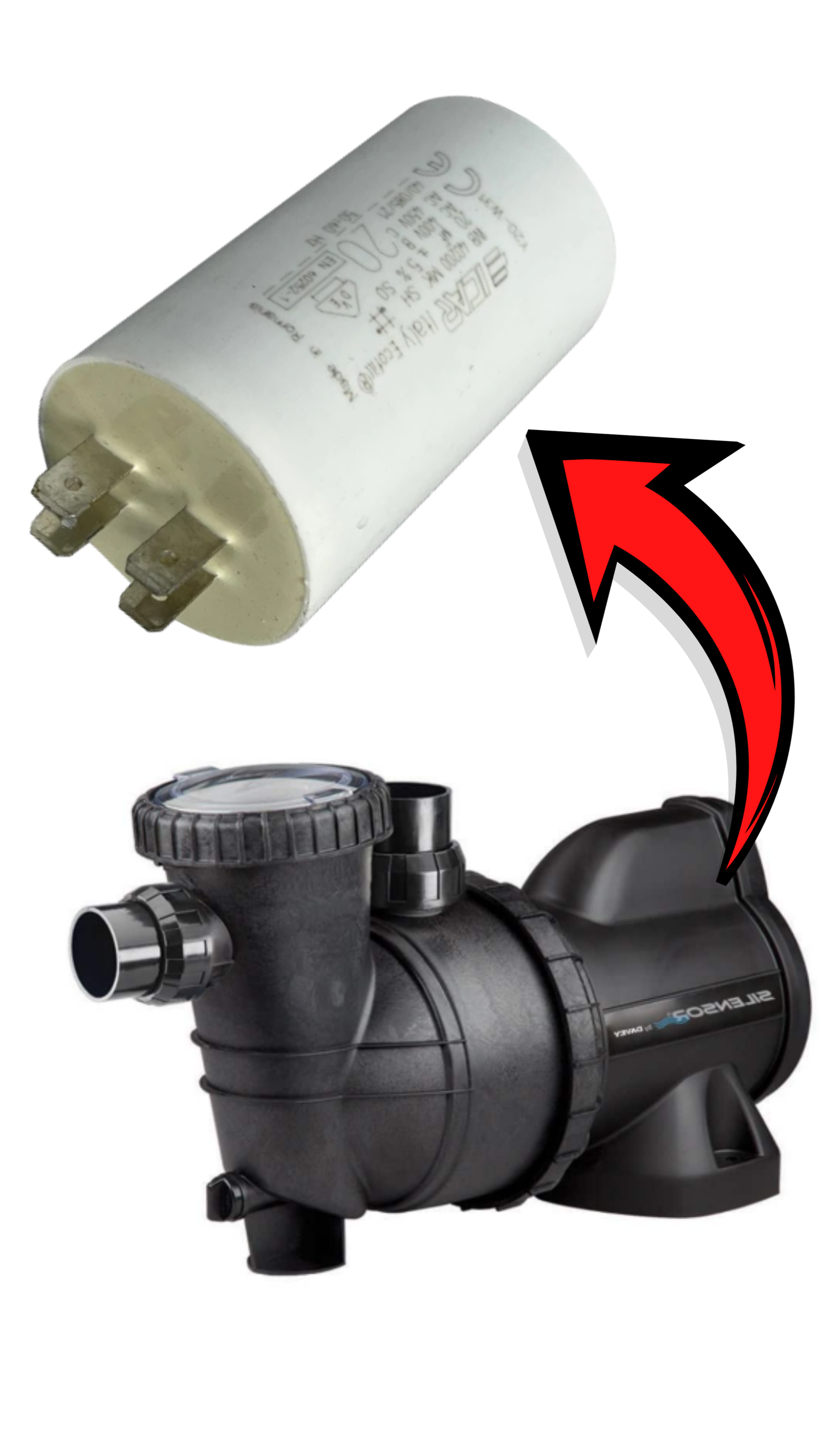
A capacitor is a small electrical component inside your pool pump that helps the motor start and run properly.
Think of it like a booster — it provides the extra burst of energy needed to get the motor spinning. Without it, the pump simply can’t start efficiently.
What Happens When a Capacitor Fails?
When a capacitor starts to fail, your pump may still get power, but it won’t be able to run properly.
This can lead to:
The pump not starting at all
The motor struggling to turn
The pump cutting out unexpectedly
Common Signs of a Failing Capacitor
1. Pump Hums But Doesn’t Start
You may hear a low humming noise when the pump is turned on, but nothing happens.
👉 This is one of the most common signs of a failed capacitor.
2. Pump Starts Slowly
If your pump takes longer than usual to start, the capacitor may be weakening.
3. Pump Keeps Cutting Out
The pump may start, run briefly, then shut off again.
4. Breaker Keeps Tripping
A struggling motor can draw excess power, causing the breaker to trip.
5. Burning Smell or Visible Damage
In some cases, the capacitor may appear:
swollen
cracked
leaking
What Causes Capacitor Failure?
Capacitors wear out over time, but certain conditions can speed up failure:
Heat and sun exposure
Electrical surges
Poor ventilation around the pump
Age (very common after a few years)
Outdoor pool equipment is especially exposed to temperature changes, which can shorten the lifespan of electrical components.
Can You Fix a Capacitor?
Capacitors are not repairable, but they are usually quick and inexpensive to replace.
⚠️ However, this involves electricity — so it’s safest to have a qualified technician handle it.
Why It’s Important to Fix It Early
Ignoring a failing capacitor can lead to:
Motor damage
Overheating
Complete pump failure
In many cases, replacing a capacitor early can save you from replacing the entire pump motor.
Key Takeaway
If your pool pump is humming, slow to start, or cutting out, the issue may not be as serious as it seems. A faulty capacitor is a common and fixable problem — but it should be addressed quickly to avoid further damage.
💡 Next in the series:Air Leaks & Loss of Prime – Why Your Pump Is Full of Bubbles